Morocco's Football Soft Power
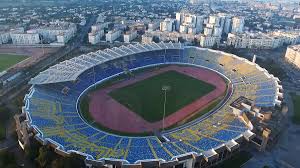
Many matches of the African qualifiers for the FIFA World Cup are played in Morocco. The main reasons are the lack of adequate sports infrastructure and the limited security conditions in the countries that should be hosting their home games.
Many stadiums are not approved by FIFA or CAF (Confederation of African Football). CAF carries out inspections and often declares facilities “unfit.” There are FIFA standards to comply with, and the hope is that everything is assessed fairly. Some countries are going through internal conflicts or political instability that make it impossible to guarantee the safe organization of matches.
This is where Morocco comes in, with its many modern, international-level stadiums (Casablanca, Rabat, Tangier, Marrakech, Agadir, etc.). The Moroccan federation is often willing to host matches for other African nations that cannot play at home. For this reason, Morocco has become a sort of African football “hub.”
What’s interesting is that Morocco exercises a form of geopolitical Soft Power through sport, asserting the authority of a growing country capable of managing difficult situations in other parts of the African continent. Through football, Morocco builds relationships with African countries that can later support it in other political matters (such as the sensitive issue of Western Sahara). Offering sporting hospitality becomes a way to secure diplomatic alliances.
Twelve matches in March 2025 were played in Morocco, involving six national teams: Central African Republic, Burundi, Comoros, Burkina Faso, Ethiopia, and Madagascar. In the June fixtures, eight national teams: Sierra Leone, Central African Republic, Gambia, São Tomé, Djibouti, Guinea, Chad, Seychelles.
This means that as many as 13 national teams could not—and still cannot—play in their home stadiums, while also having to deal with extremely long trips. Think of Comoros, Seychelles, and Djibouti, for example. Beyond the issue of fairness—hard to ensure given the logistical problems—there are costs to bear, which most of these countries are simply unable to afford. How do they manage?
CAF, together with FIFA, allocates solidarity funds and contributions for official competitions (such as World Cup qualifiers). In many cases, it covers at least part of the travel and accommodation expenses for federations forced to play “in exile.”
Through the “FIFA Forward” program, each federation receives annual funds for football development and official competitions. Part of this money can be used for national team travel.
It is not uncommon for the Moroccan federation (FRMF) to cover some of the logistical costs (free use of stadiums, security organization, sometimes even local accommodation). That’s the Soft Power mentioned above.
In some cases, governments (through ministries of sport) or private sponsors help cover national team travel, because federations alone would not be able to manage.
The highly skilled President of the Moroccan Football Federation, Fouzi Lekjaa (who also holds prominent roles within CAF and FIFA), offers stadiums for free in exchange for international visibility for Morocco. Let’s not forget that the North African country has been awarded hosting rights for some matches of the 2030 World Cup.
From a sporting perspective, this is certainly a problematic situation that, unfortunately, occurs only in Africa. We know how popular football is on the continent, yet millions of fans cannot watch their idols play for reasons that are incomprehensible but chronic in a land historically exploited and never truly valued. And so, last night, Guinea—featuring Serhou Guirassy, Borussia Dortmund’s striker—played Algeria in Casablanca in front of only a few spectators. For Guinean children to see their idol, they will have to wait. Nobody knows how long.